
(1936-1950) Dues Paying: Wartime years and beyond
In Part 1, my grandfather Thomas Martin Moore (“TM”) started working at 7, and by the time he was 22 he had worked at a diner, on a dairy farm, in a stockyard, at Montgomery Ward, and as an auto mechanic.
In 1936, at 22 TM became a professional welder, an essential wartime occupation that would be his trade for the next twenty-five years. No doubt he learned early from his father Elmer, a skilled blacksmith and fair welder, before getting his own certification. Combination arc and gas welding (i.e. using electricity and acetylene, was extremely dangerous as it used flammable gas under pressure. TM’s work advanced over the years from mere manufacturing to working on gas filled pipelines.
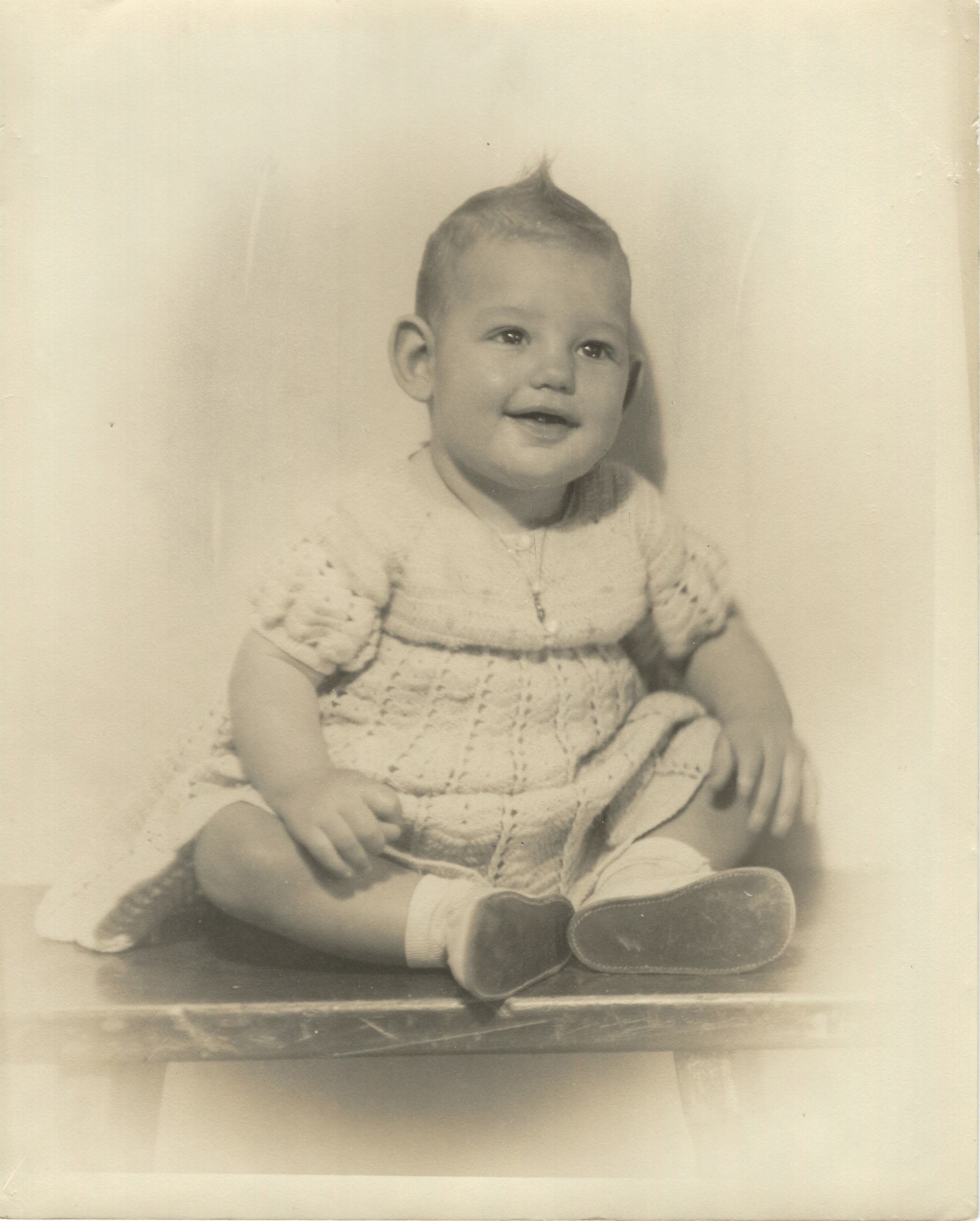
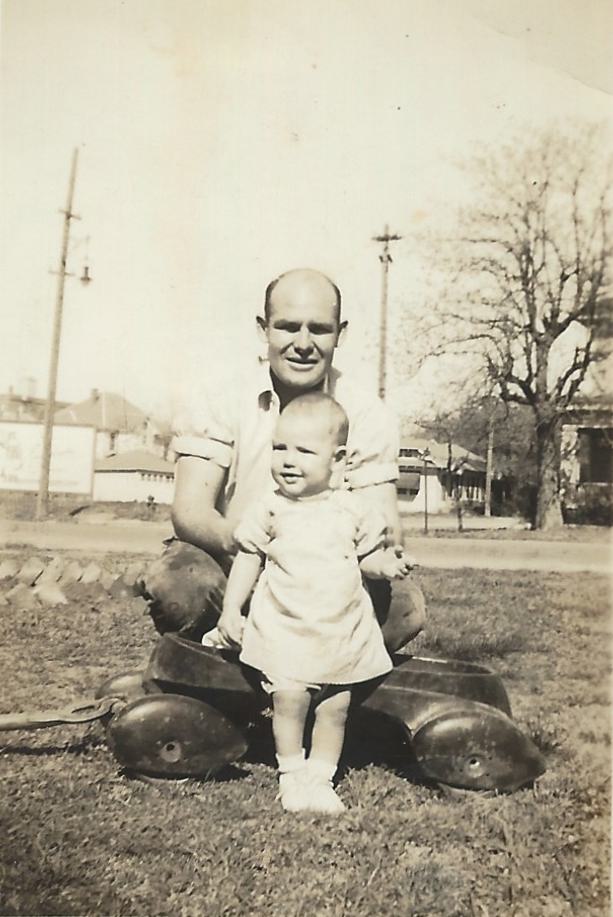
TM began fabricating oil field drilling equipment for American Manufacturing Company in Fort Worth, where first daughter, Linda, was born. At that time they lived in an apartment in downtown Fort Worth around the corner from Billie’s grandpa Wallace, who lived at 512 Jennings Avenue.
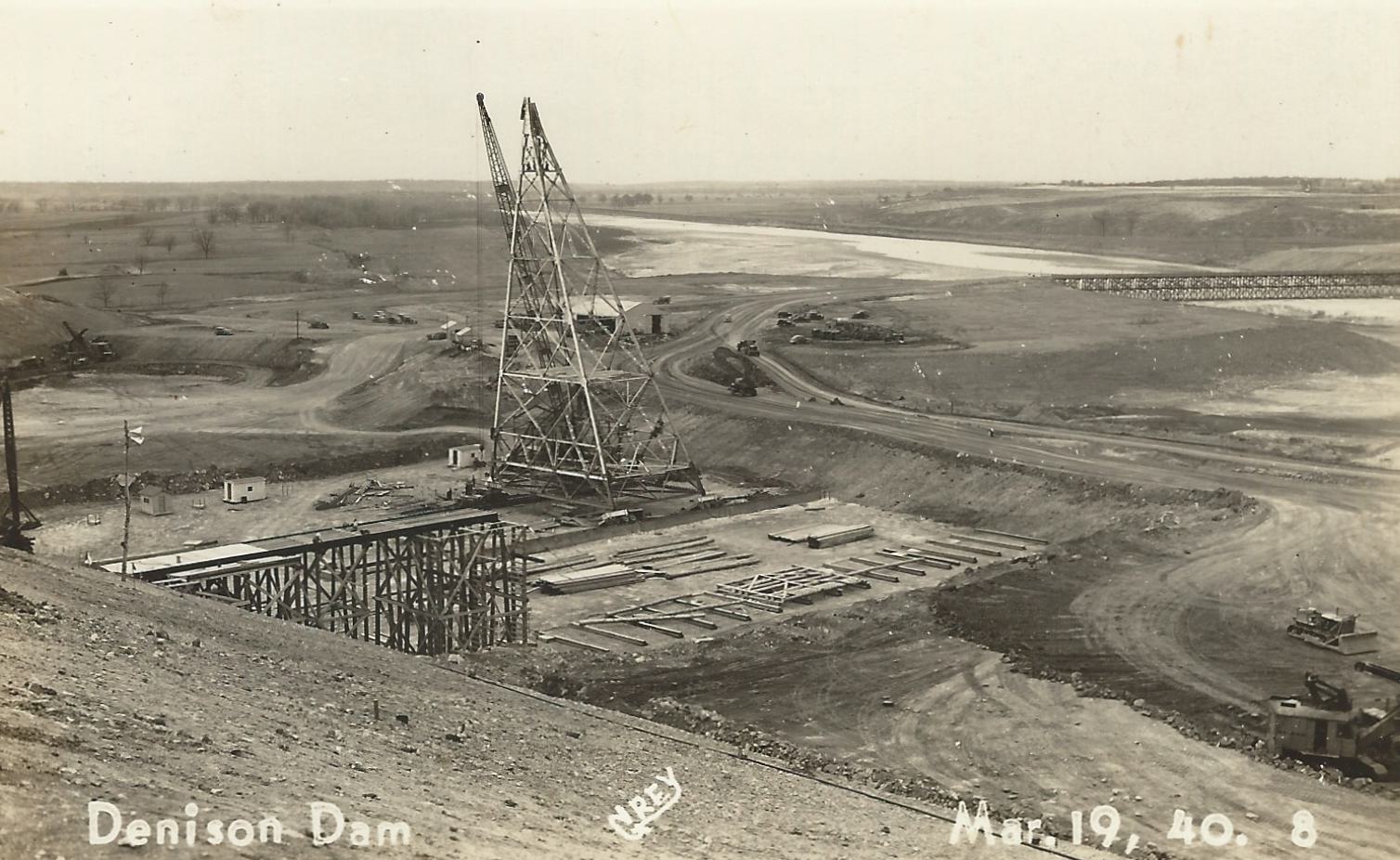
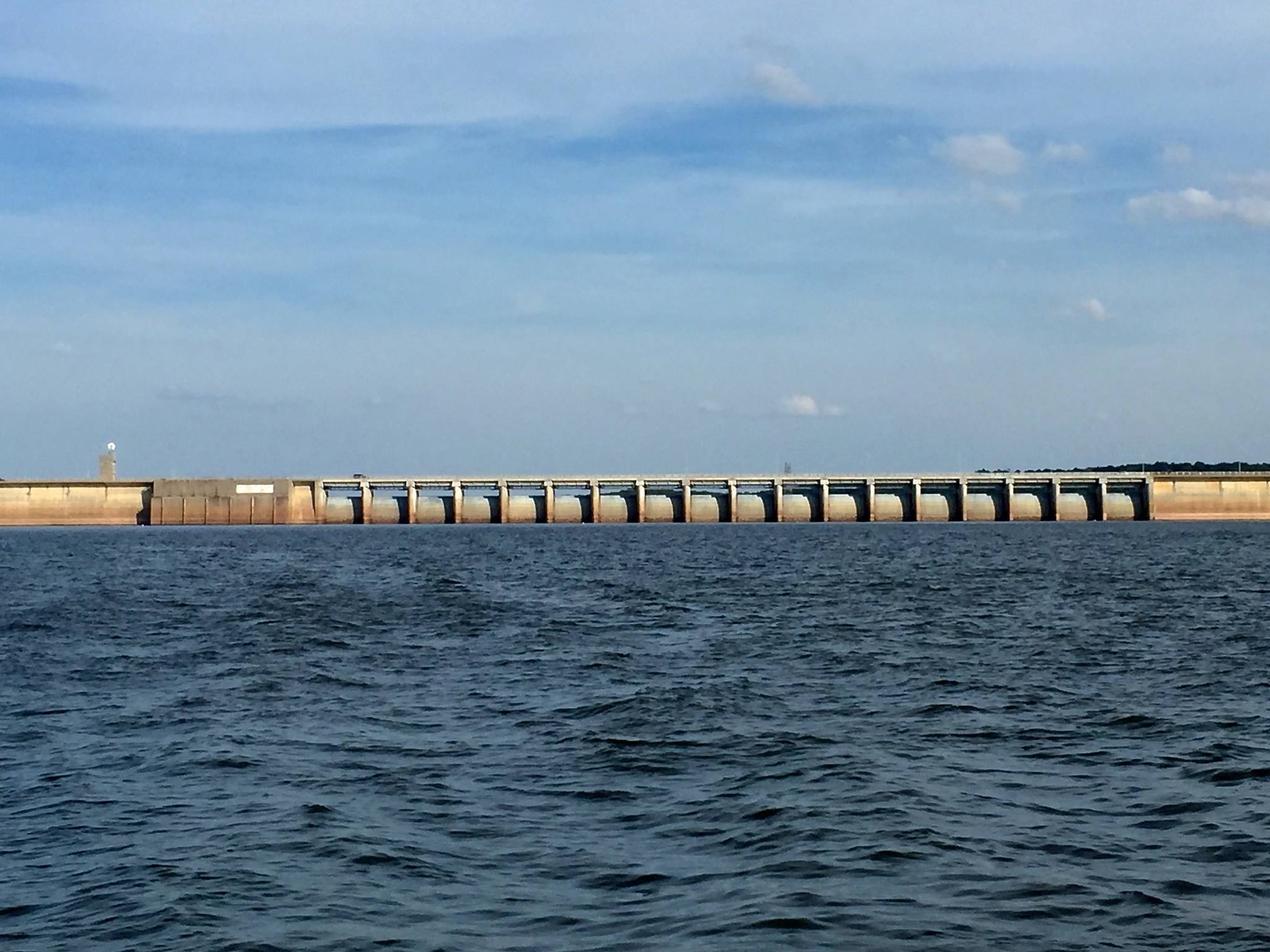
After AMC in Fort Worth, TM worked for a company that specialized in building electric power plants. (It may have been Brown and Root.) The family lived in hotels, trailers or apartments during these jobs. The first such project was at Denison Dam on the Red River at Lake Texoma near Denison, Texas. It was 1939, and the jobs paid from $1.50 to $1.625 per hour.
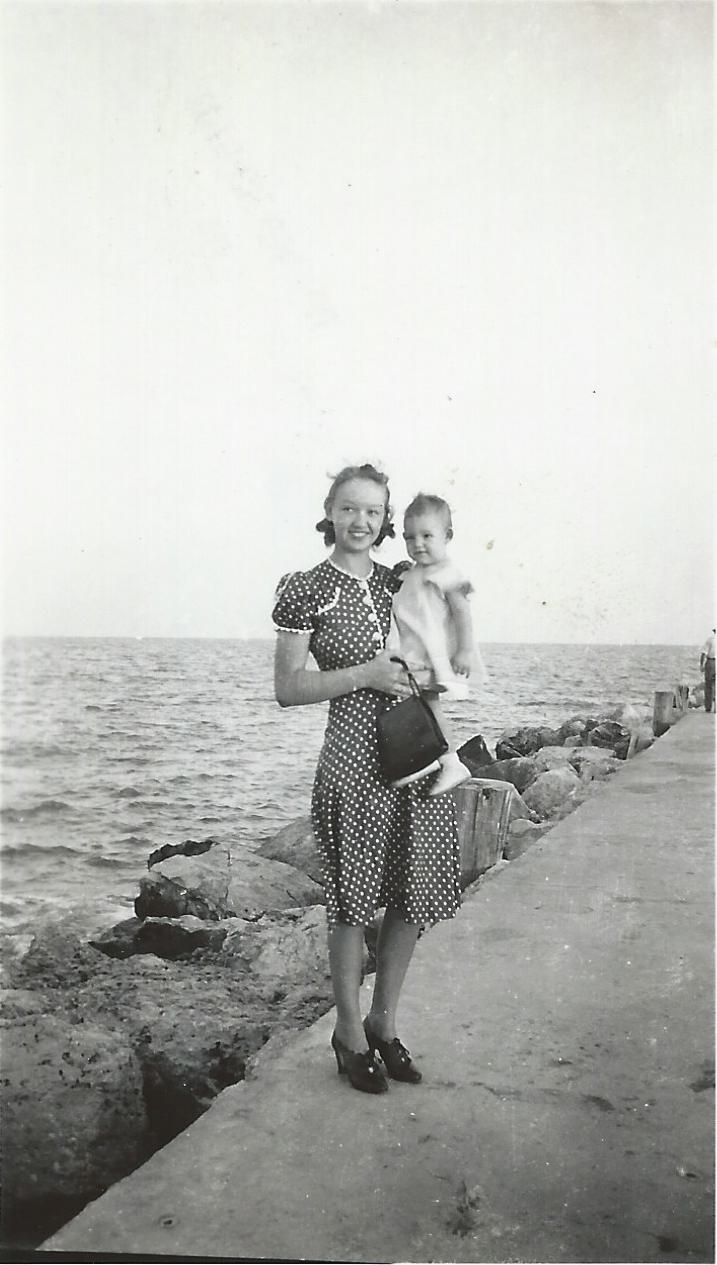
Later that year, TM took a civil service exam, and the government told him to report to the Brooklyn Naval Yard in New York. “We packed our car with as much household goods as possible, made a bed for the baby on the back seat, and set out for the big city,” Billie wrote.
When they arrived, TM’s co-workers said he would not want wife and baby to live in Brooklyn, so they rented an apartment across the river in Elizabeth, New Jersey. A railroad ran behind the apartment, and little Linda would run to the window to see the train when she heard it coming, then burst into tears when she missed it.
They strolled the baby through the World’s Fair in Flushing Meadow and were impressed by the Holland Tunnel from Jersey City to Manhattan. “It was like a foreign country to us. The people couldn’t understand our Texas drawl, and we certainly had trouble with their accents…The children on the streets of Brooklyn would notice our Texas license plate and hang on our car so they could see a real live Texan; it was almost impossible to drive down the streets.”
Dissatisfied with Brooklyn, they moved to Norfolk, Virginia, where TM worked in the Newport News shipyards, patching the hulls of ships damaged in action.
Homesick, they returned to Texas when TM’s old employer asked him to return. In 1940 he helped construct Marshall Ford (later Mansfield) Dam on the Colorado River/Lake Travis in Austin. They lived in a motel in Austin. From June 1940 to Sept 1941 he helped build Corpus Christi Naval Station’s power plant, which trained naval pilots, navigators, gunners and radio operators.
“On December 7, 1941, the attack on Pearl Harbor blasted the people of the U.S. out of our complacency … TM went down to sign up for the draft, and I took a Red Cross first aid course and learned to wrap bandages …TM was 27 and was above the age for the first draft.”
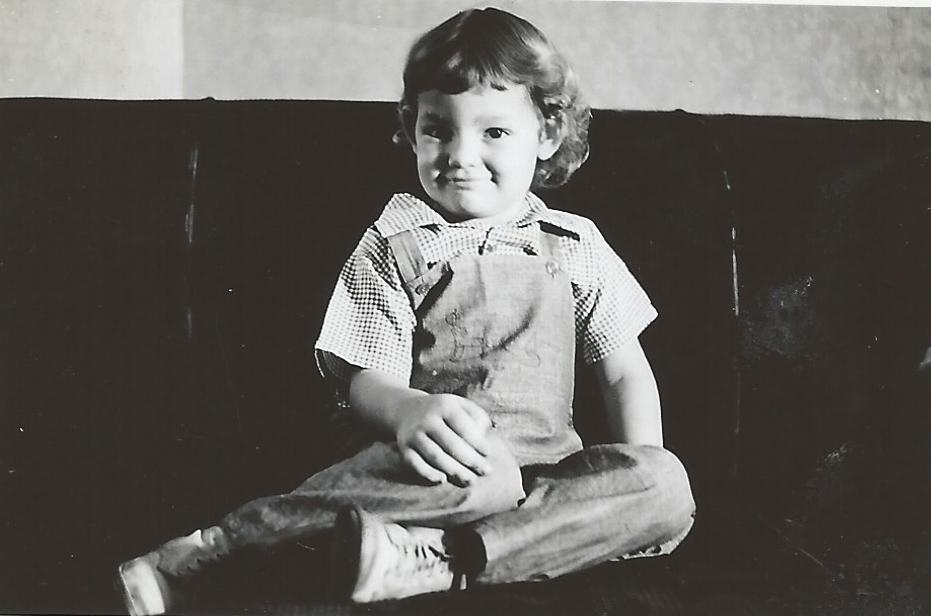
Back in Fort Worth when the U.S. entered the war, TM worked at the Fort Worth Aircraft Assembly Plant for the U.S. Army (link) for the Austin Co. (Sept 1941 to March 1942). One of the world’s largest aircraft plants at 563 acres, the mile-long “Bomber Plant” produced over 3000 “Liberator Bombers” during World War II.
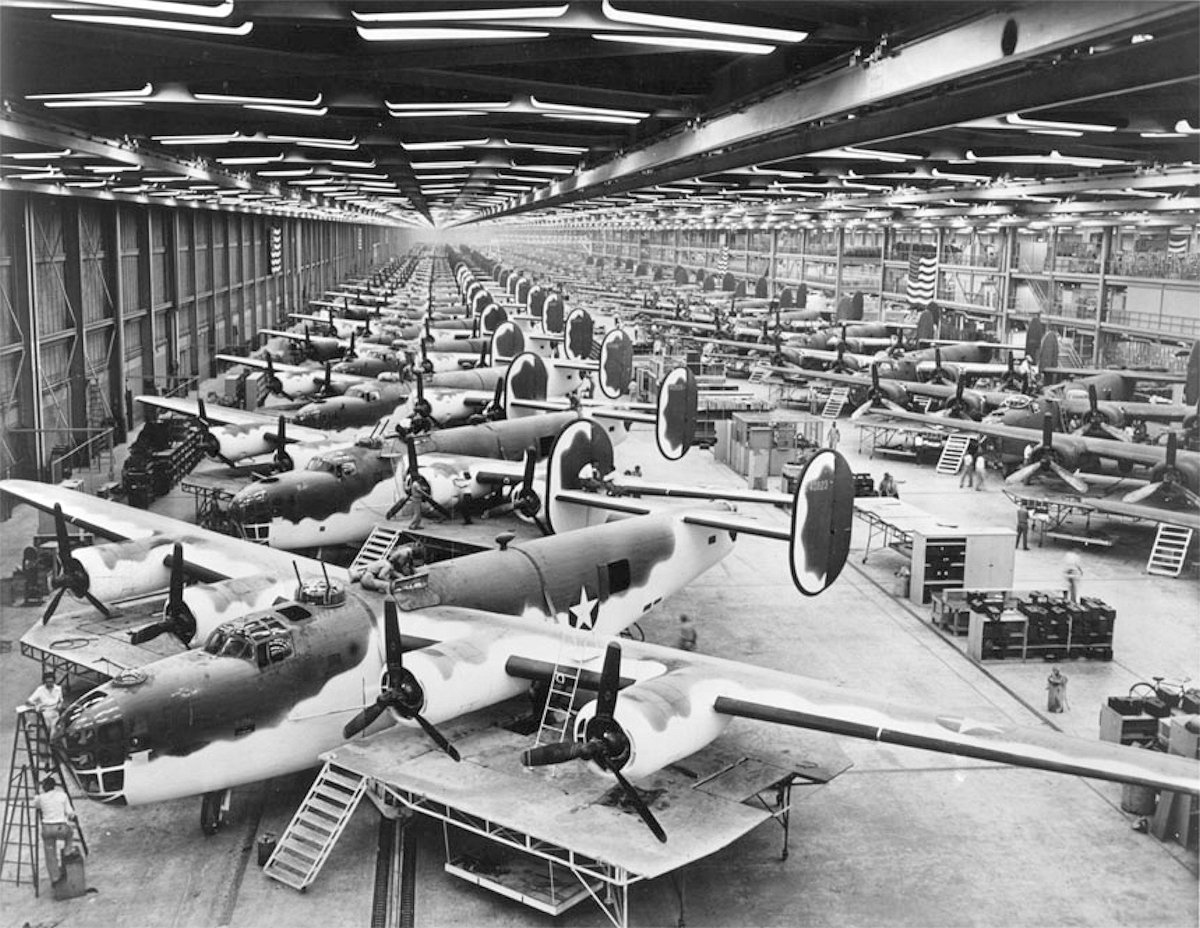

TM loved to fish when not at work. Below he’s with Billie’s father Vernon Polk (my maternal great-grandfather) “in Rio Grande City at the Reagans in 1941 while a dam was being built.” (Louise Reagan was Mema’s sister.) Perhaps TM also worked at Falcon Dam on the Rio Grande.

Mema wrote, “The life of a construction worker for a large company means a lot of moving from place to place, usually with a group of close friends. Most of these same friends we still have today, although they are in many different kinds of businesses.”
While building the Fort Worth aircraft plant, they purchased an Airstream house trailer to live in during TM’s nomadic jobs. These included a three month stint at the Lone Star Ordnance Plant at New Boston, Texas, in 1942, which made army ammunition, from small-caliber bullets on up to bombs, and a stint in August 1942 at the Bluebonnet Ordnance Plant, McGregor, Texas, west of Waco, before he resigned for a “better job.”

The “better job” was back in Austin helping build the concrete Mansfield Dam that was replacing the prior earthwork Marshall Ford dam (August 1942-Feb. 1943).
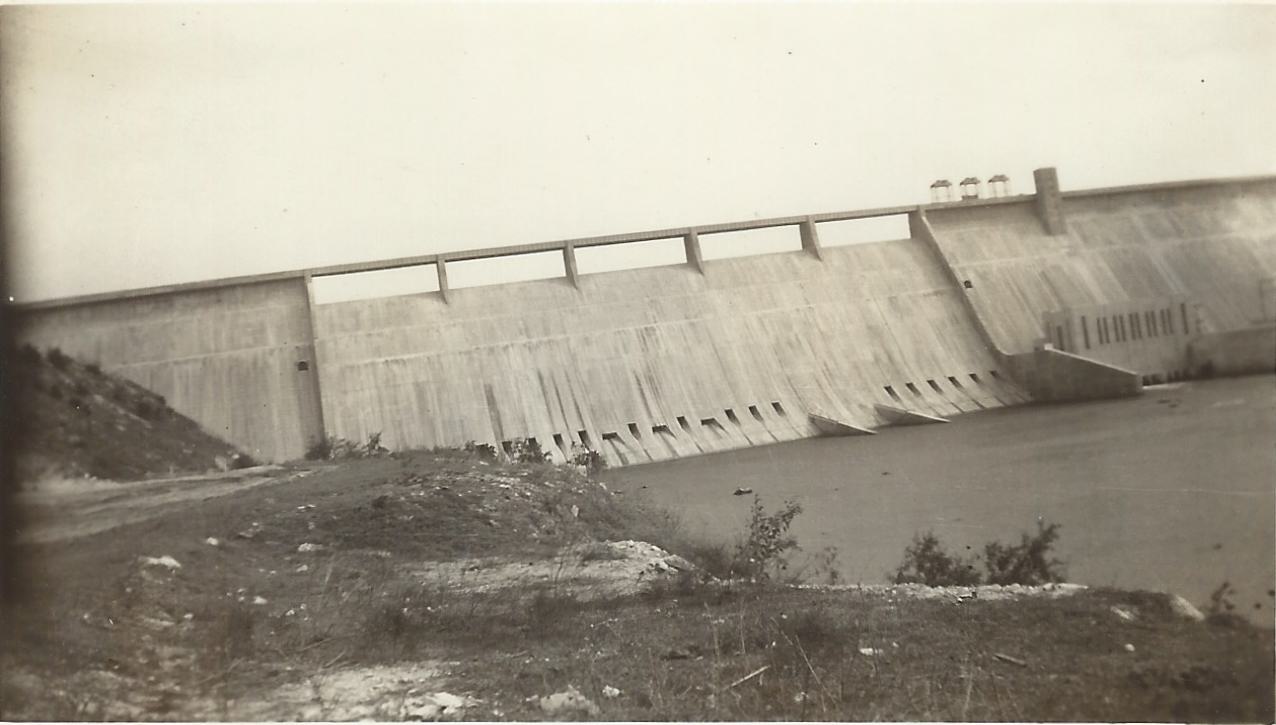
While working on Mansfield Dam, they lived in their Airstream trailer on Guadalupe Street. Mom remembers it as a “tourist court” – a circular drive with the trailers parked around the circle pointing out like rays from a sun.
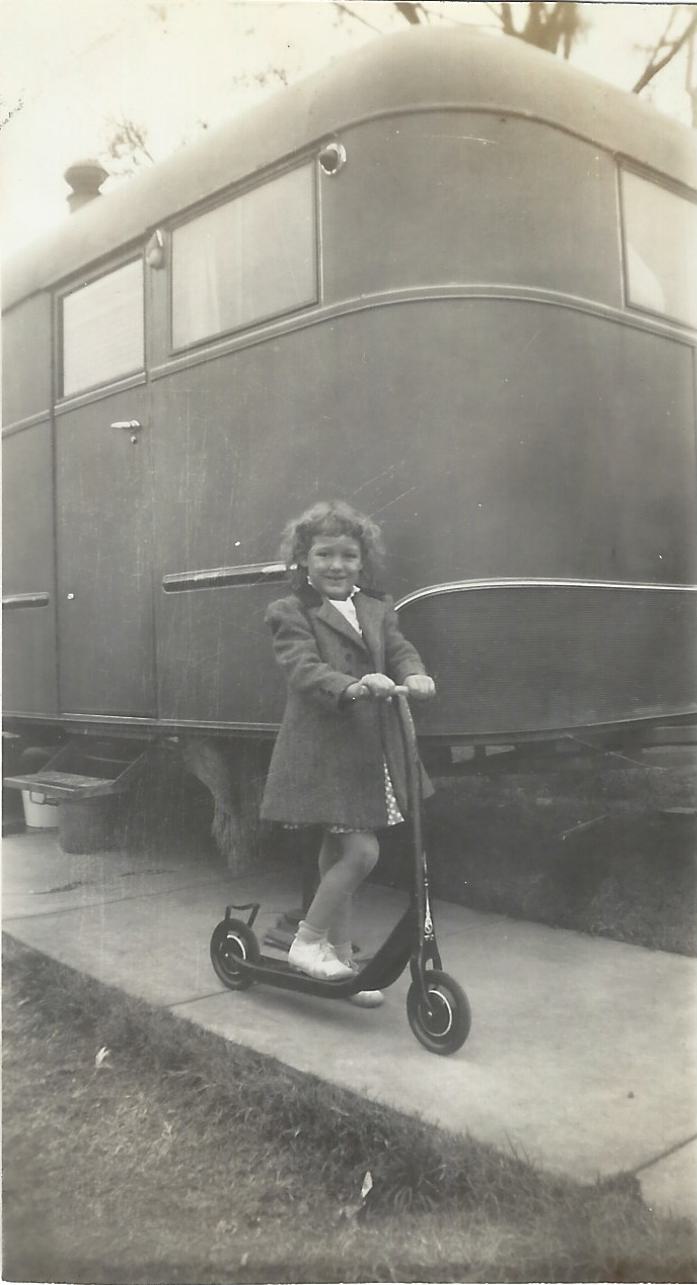
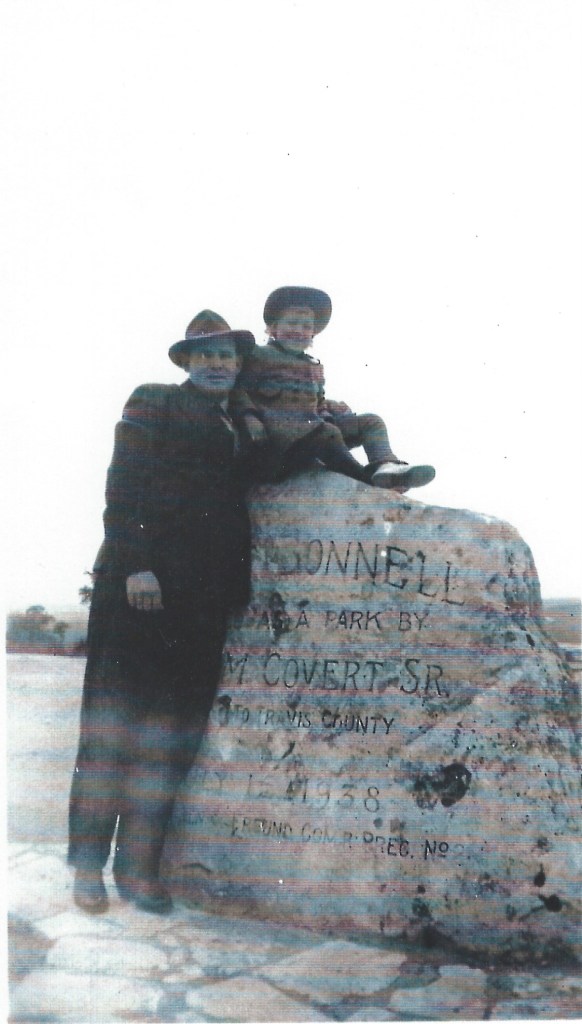
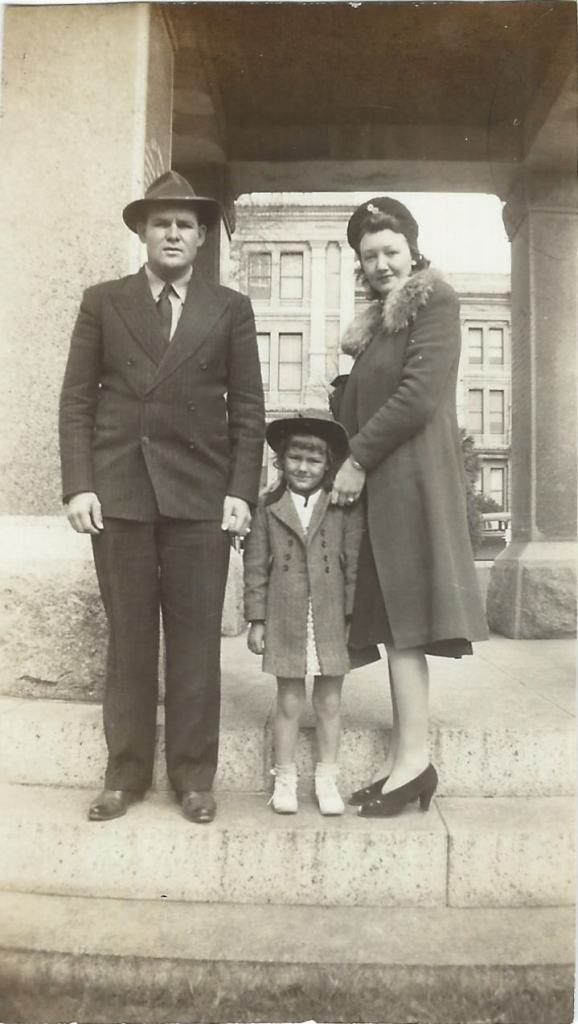
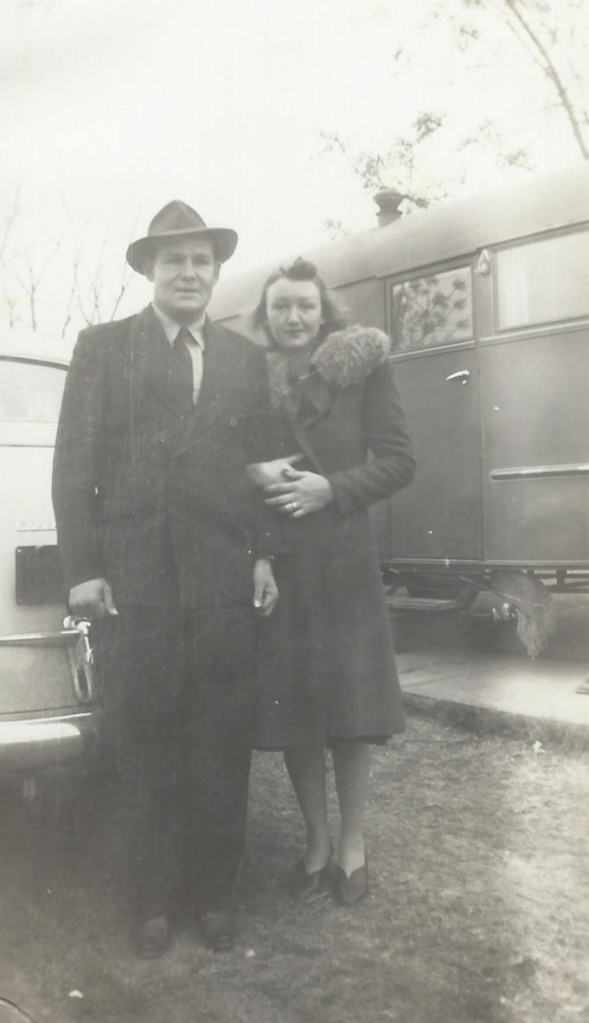
Dressed up in Austin at Mount Bonnell and the State Capital
They finally parked the Airstream at a trailer park in Corpus Christi in March 1943, and TM began working at oil and gas refineries as an “essential worker.” During World War II, a small business in war production was called a “Swapco” (SWPC), and a large defense plant was a “Plancor”; both had claims on skilled workers in essential industries. The workers had to be released before they could work elsewhere, and had to stay in an essential industry.
By now he was a skilled enough welder to do high-pressure jobs, working on chemical and oil refineries, high-pressure gas pipelines, as well as repairing oil storage tanks and grain silos, all of which were inclined to explode from sparked gases from the welder’s work inside them. He might also work 150 feet up on a cracking refinery tower or at the top of some tall tank, or the tilted steel roof of a tall building.
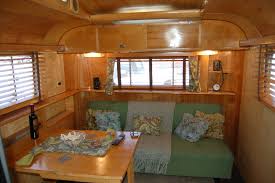
They lived at Elliott’s Trailer Park on North Beach in Corpus Christi. Five year old Linda slept on the dinner table which folded down from the wall; the chair cushions became the mattress. Mema would fold it back up in the morning so they could eat breakfast. She would bathe Linda at the facilities across the street, then Daw would carry the toddler home so Mema could bathe herself. Eventually Daw built a small landing with steps for the trailer, and they put out a BBQ pit and lawn chairs. They would try to find shade under the palm trees.


TM and Billie sprucing up their home at Elliott Trailer Park 1944
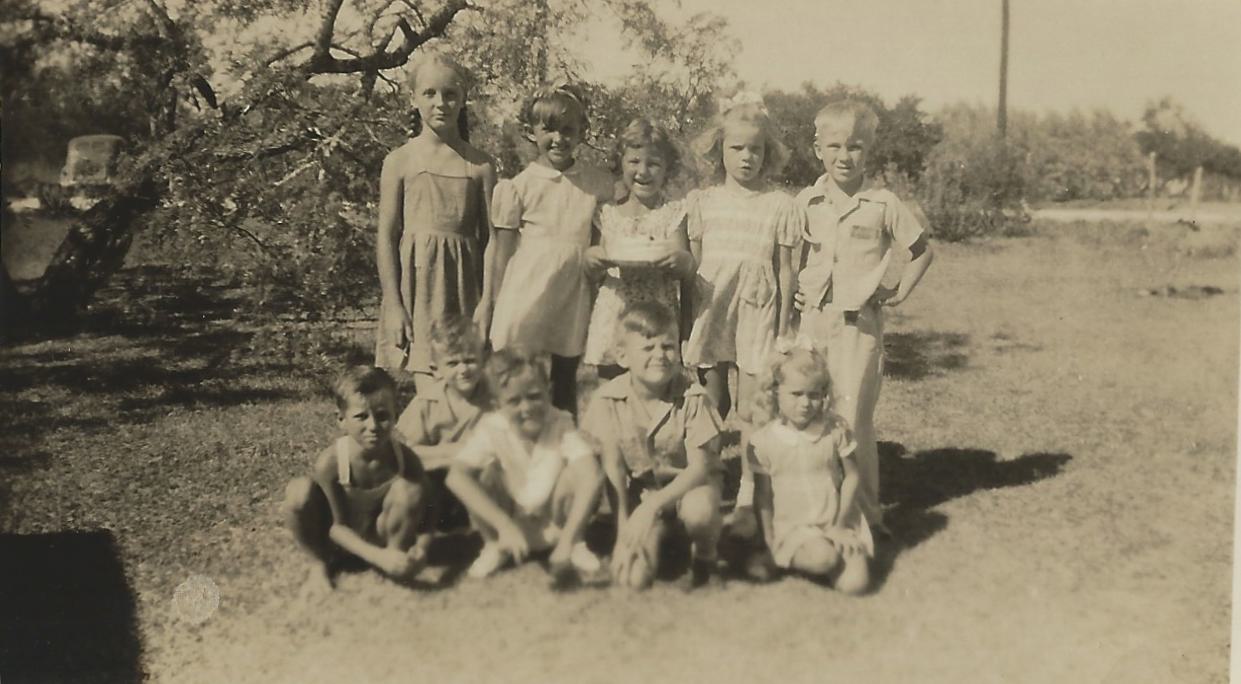
Mom loved living 200 yards from the beach where they would go swimming and fishing. She started 1st grade at North Beach Elementary School, across the street from the trailer park. You can see it behind her in this photo.

For the next two years, TM’s jobsites included (he usually worked for a subcontractor on a jobsite):
- Taylor Refining Co., Corpus Christi, for J.F. Pritchard (1943-44)
- Charles G. Heyne & Co., and Humble Oil and Refining Co., Ingleside, Texas, for Refinery Maintenance Service Co. (RMSC) (1944)
- Great Southern Corp.’s construction of 100-Octane Gasoline Refinery, for Arthur McKee & Co. (1944), $1.875/hour
- Taylor Refining Co., for RMSC (1945)
Although TM was too old at 27 for the first draft, he was drafted in 1944 and ordered to report the summer of 1945, but his employer RMSC protested his removal from an essential industry since his high-pressure welding was a much-needed and scarce skill for war production. The war ended the following month.
Soon after learning TM would not be drafted, the Moores learned they were expecting another child. They had been saving pennies in a cookie jar to buy a house. In July 1945, they paid $50 in earnest money and $327.80 as a down payment for their first home at 3009 South Staples in Corpus Christi. Built a year earlier, they assumed the first owner’s 25-year mortgage with payments of $26.69 per month.
The house was 1042 square feet, and had three bedrooms, one bathroom, and no garage. Of course, TM would build the family a garage.
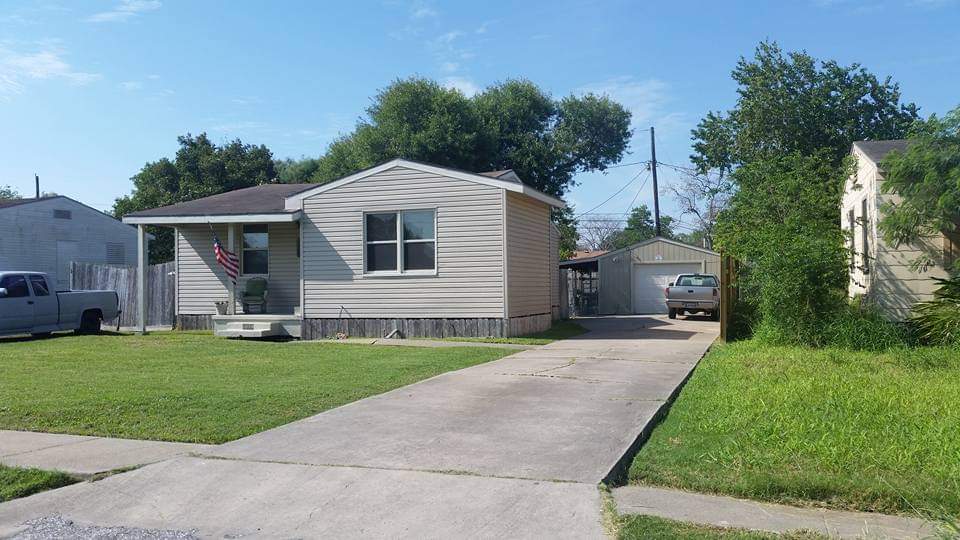
Linda switched to Sam Houston Elementary school, two blocks away from the new house, and TM bought her a bicycle which she rode to school for the next 4 or 5 years.
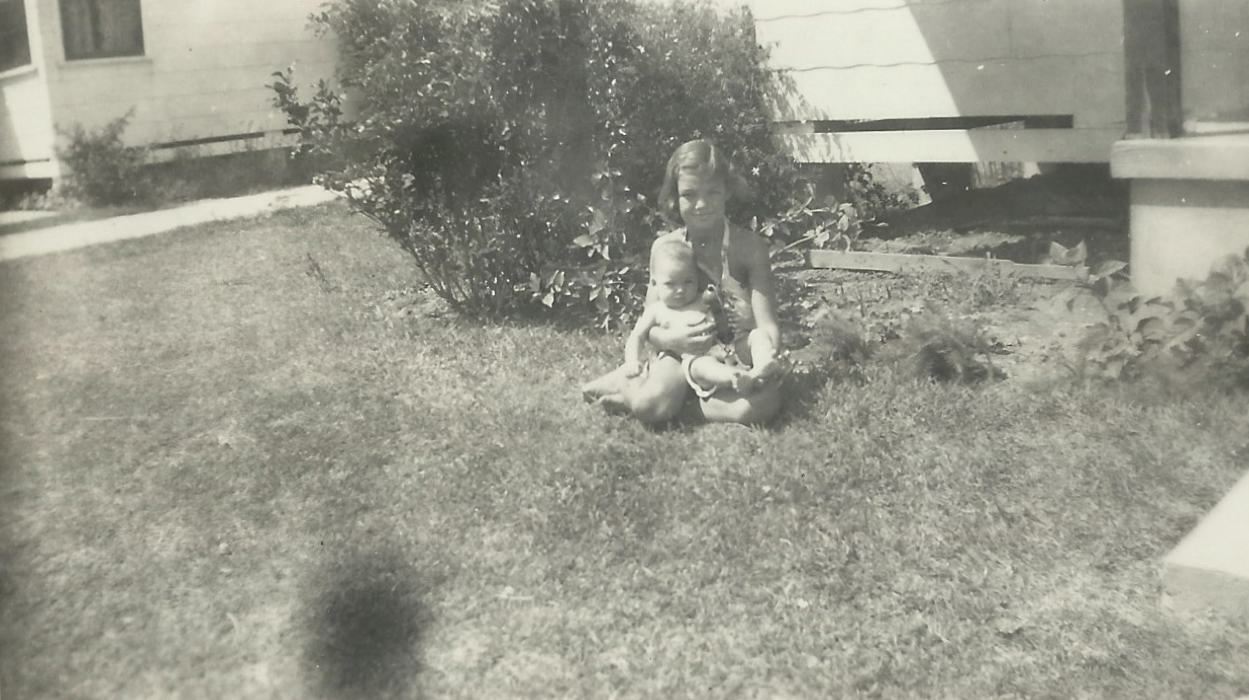
TM and Billie’s second child, Susan Kathleen Moore, was born on March 4, 1946.
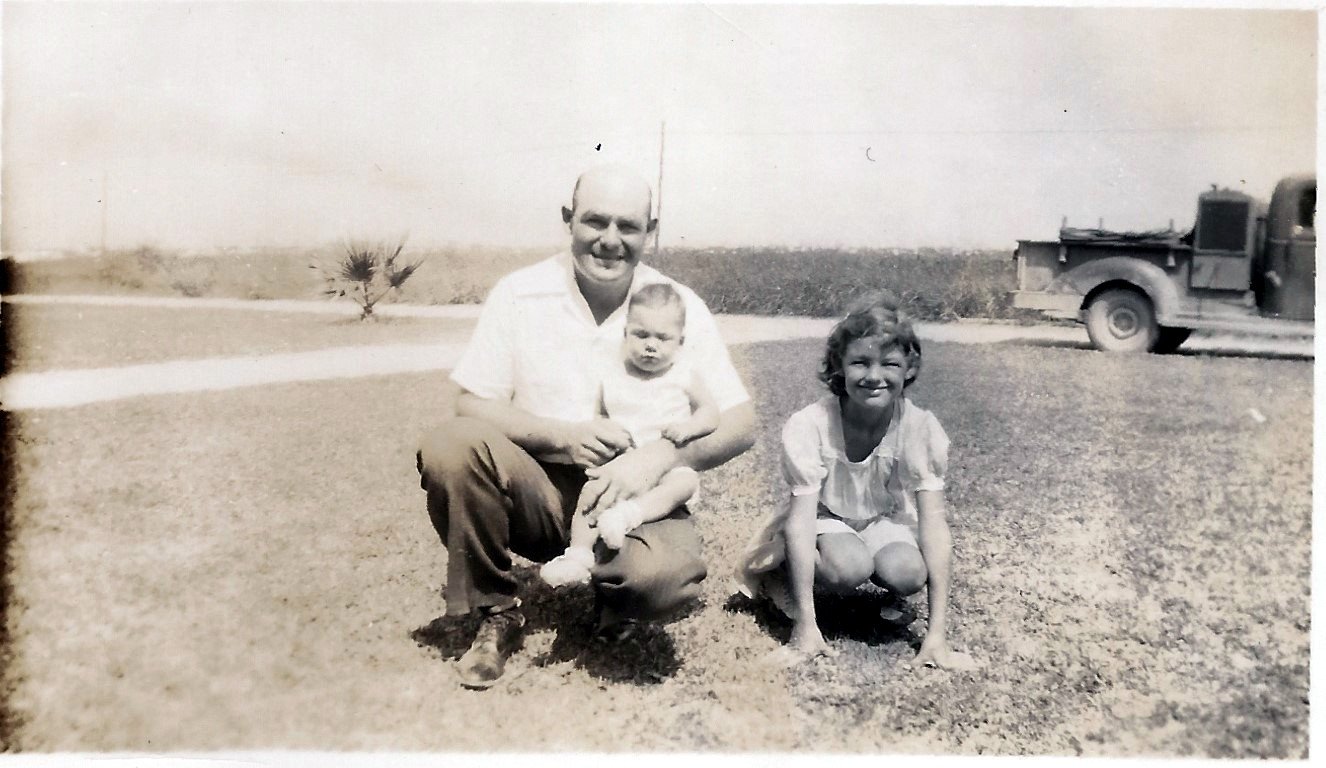
That same year TM and friend Bill Shuford started a welding and fabricating business, Moore & Shuford. TM took out rolling loans, using his 1942 Chevrolet sedan as collateral, to cover expenses until income on jobs came in from the business.
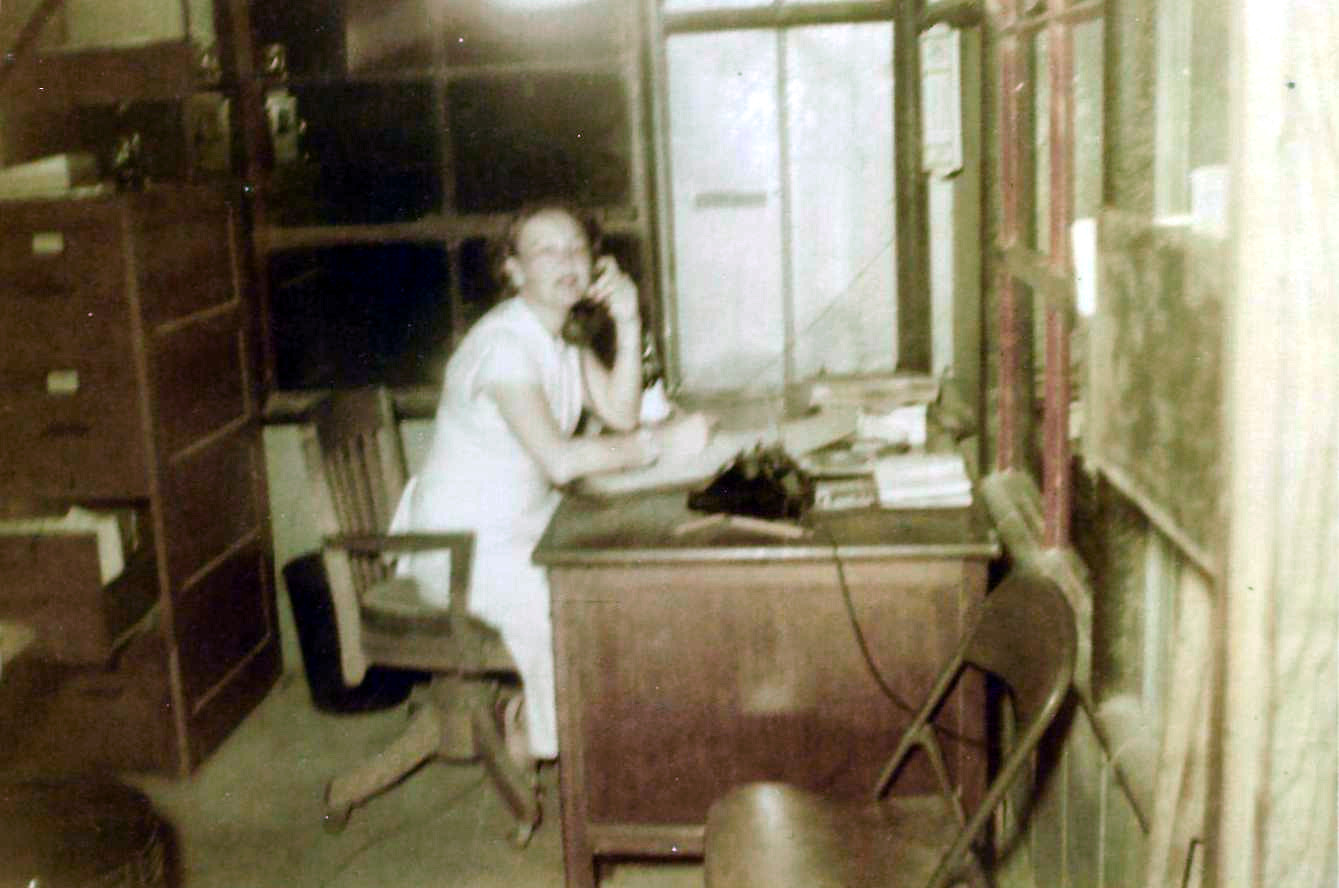
Billie ran the business as secretary and bookkeeper, while TM did the hard labor, and it became a reputable and successful business.

The couple kept an active social life even while working hard. They were inducted as members of the Order of the Eastern Star in 1946 (and would later be honored as 50-year members and have the emblem of the Order of the Eastern Star engraved on their joint tombstone.) TM was also a member of the Ancient Free and Accepted Masons and moved his Lodge to Corpus Christi. (He would later be honored as a 50-year member and benefactor for Aged Masons.)
After two years, they bought-out Shuford, who had decided to devote all his time to home building, and changed the name to Moore’s Welding and Fabricating. The business included a sheet metal building at 2821 Agnes Street, plus the welding cutting and shop equipment, trucks and truck equipment.
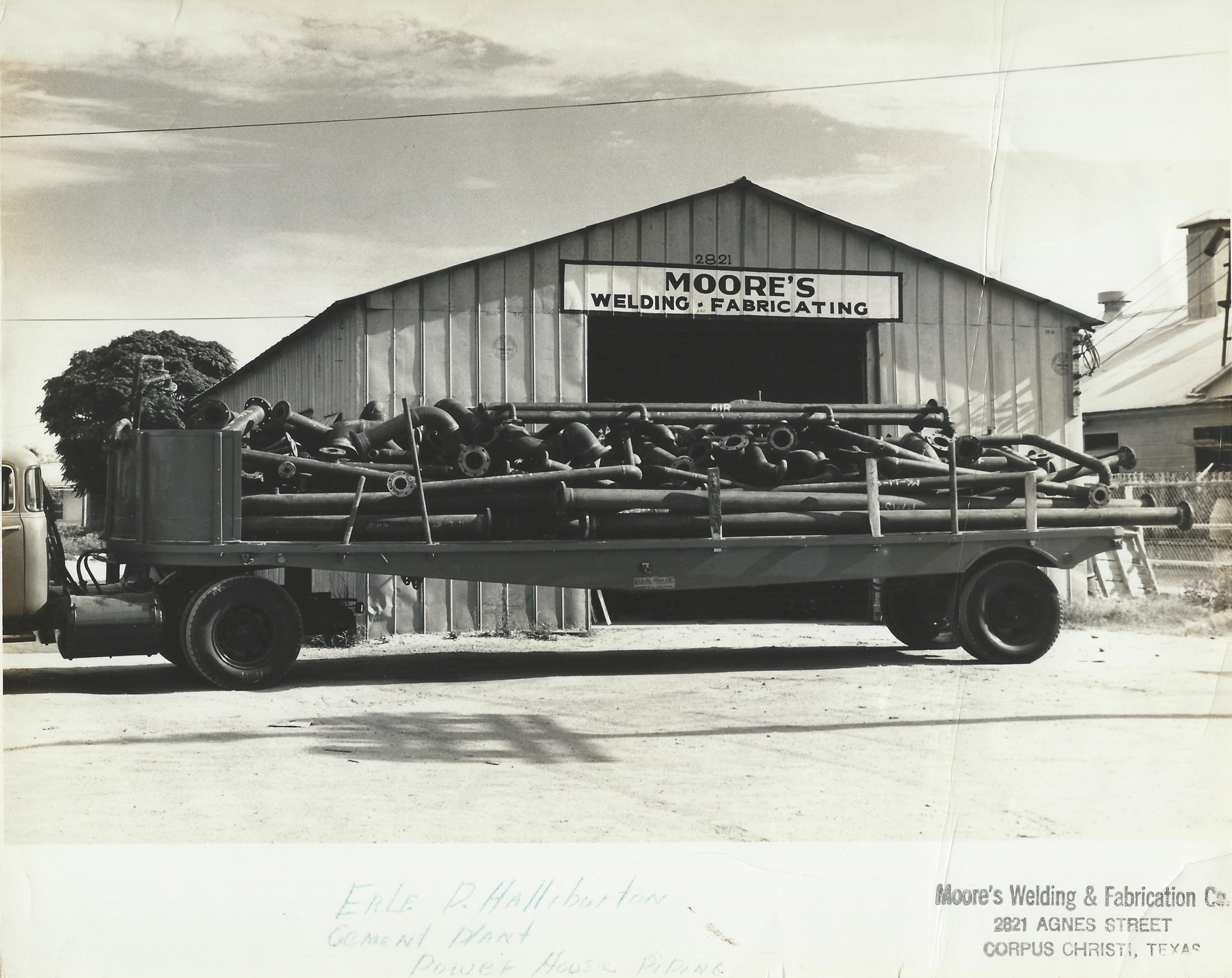
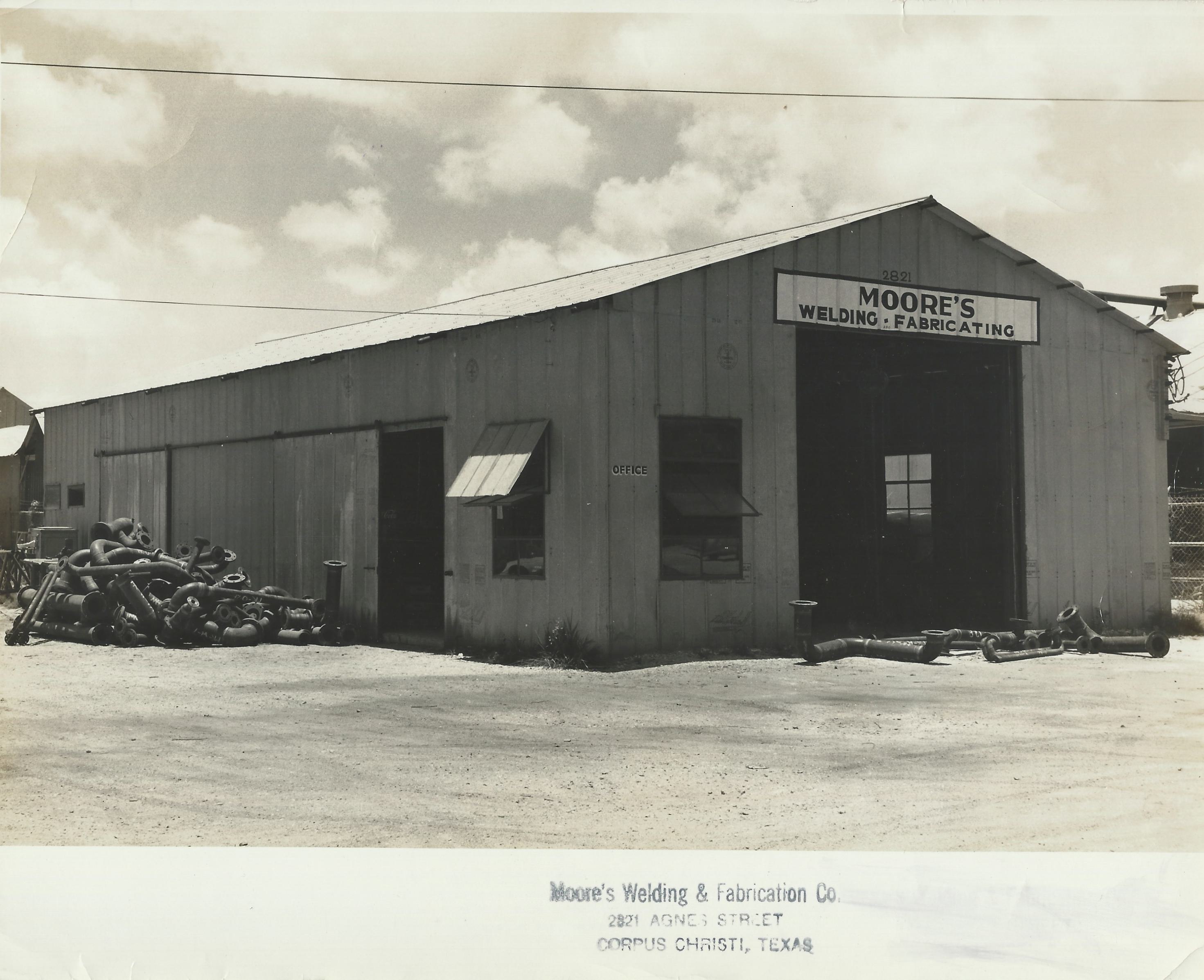
TM chose a green shamrock for the company symbol.

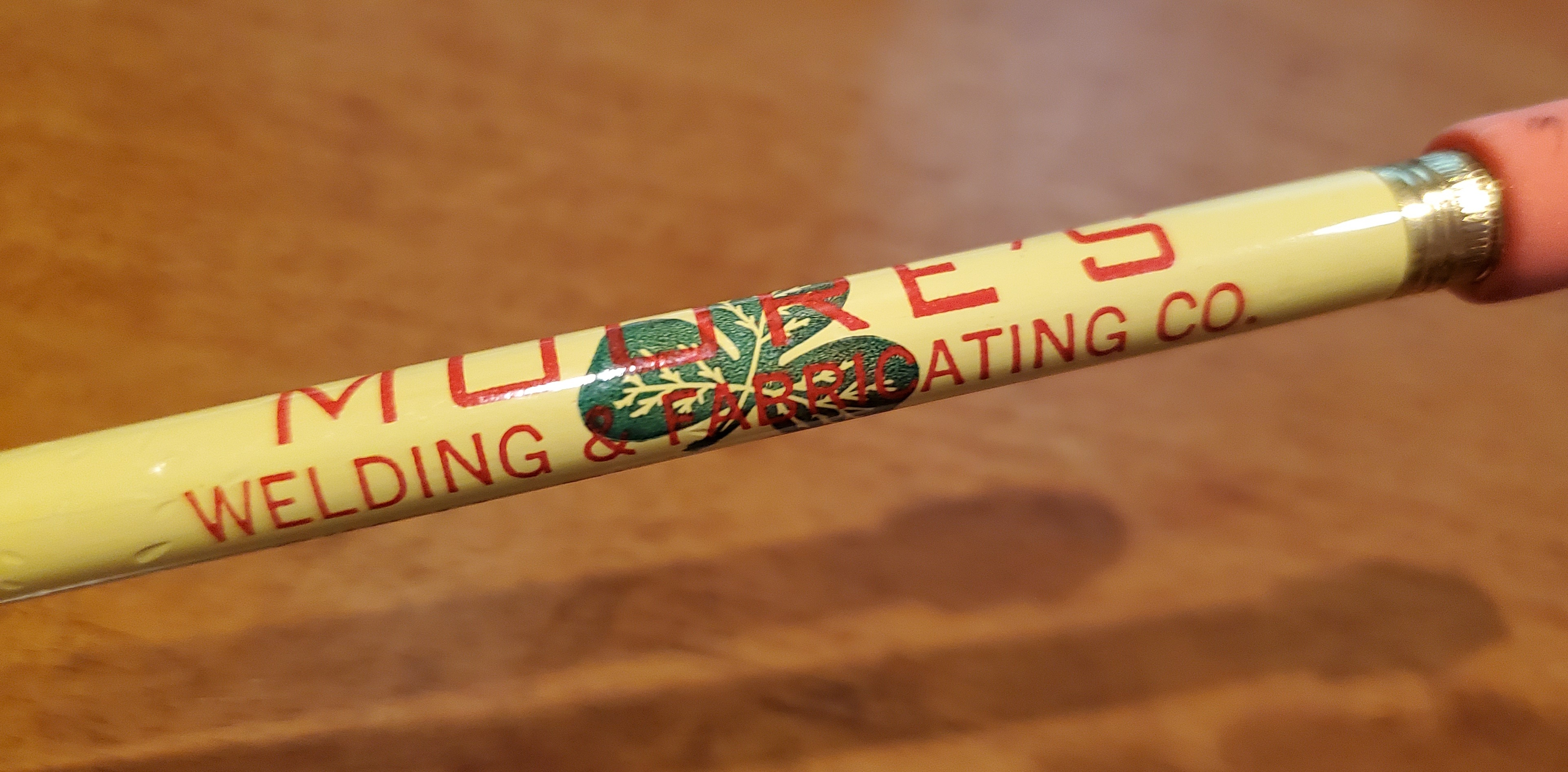
“We did a great deal of refinery and oil field work, pipe fabricating for power plants, and steel erection on small buildings. It is a great satisfaction to my husband to be able to drive around C.C. and see the results of those years when he owned Moore’s Welding & Fab. Co.”

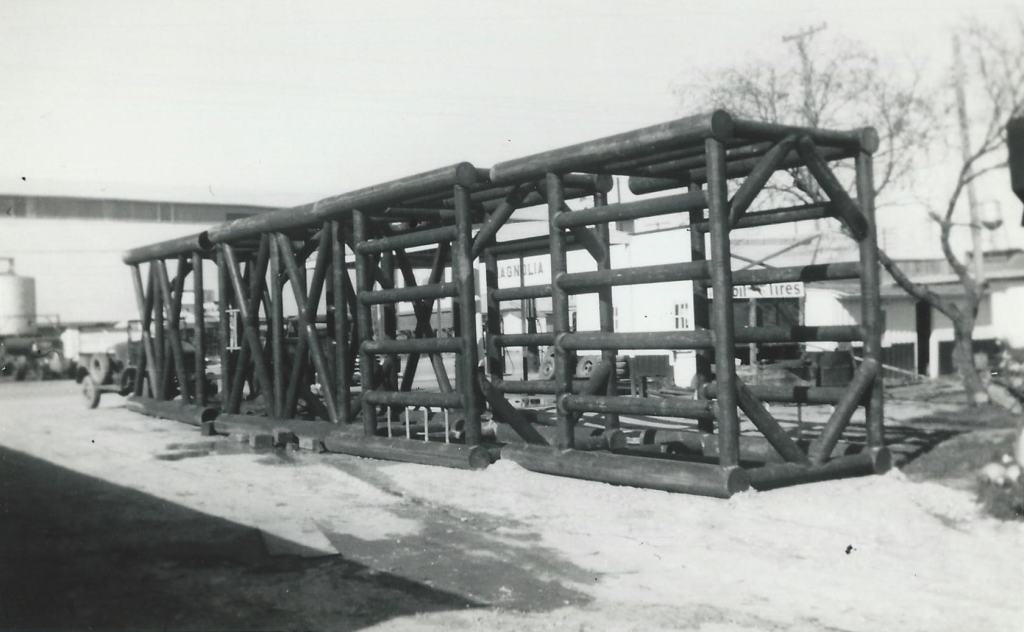
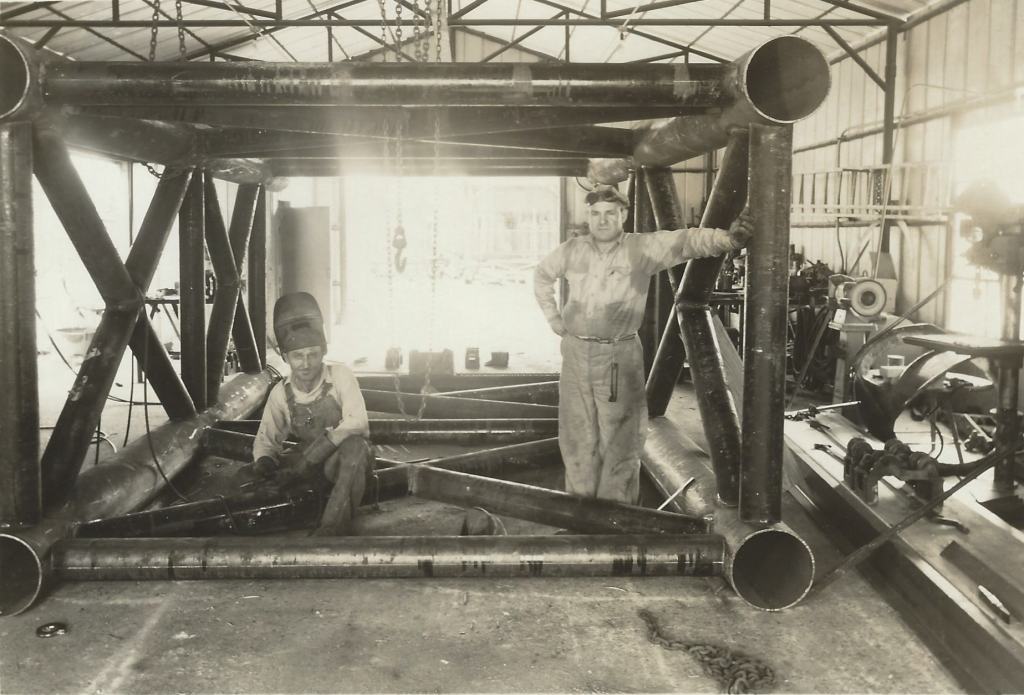
Over the years TM did many projects on the Corpus Christi Naval Air Station, where the Blue Angels headquartered, Navy crews trained and which was a vital air facility during the Vietnam War.
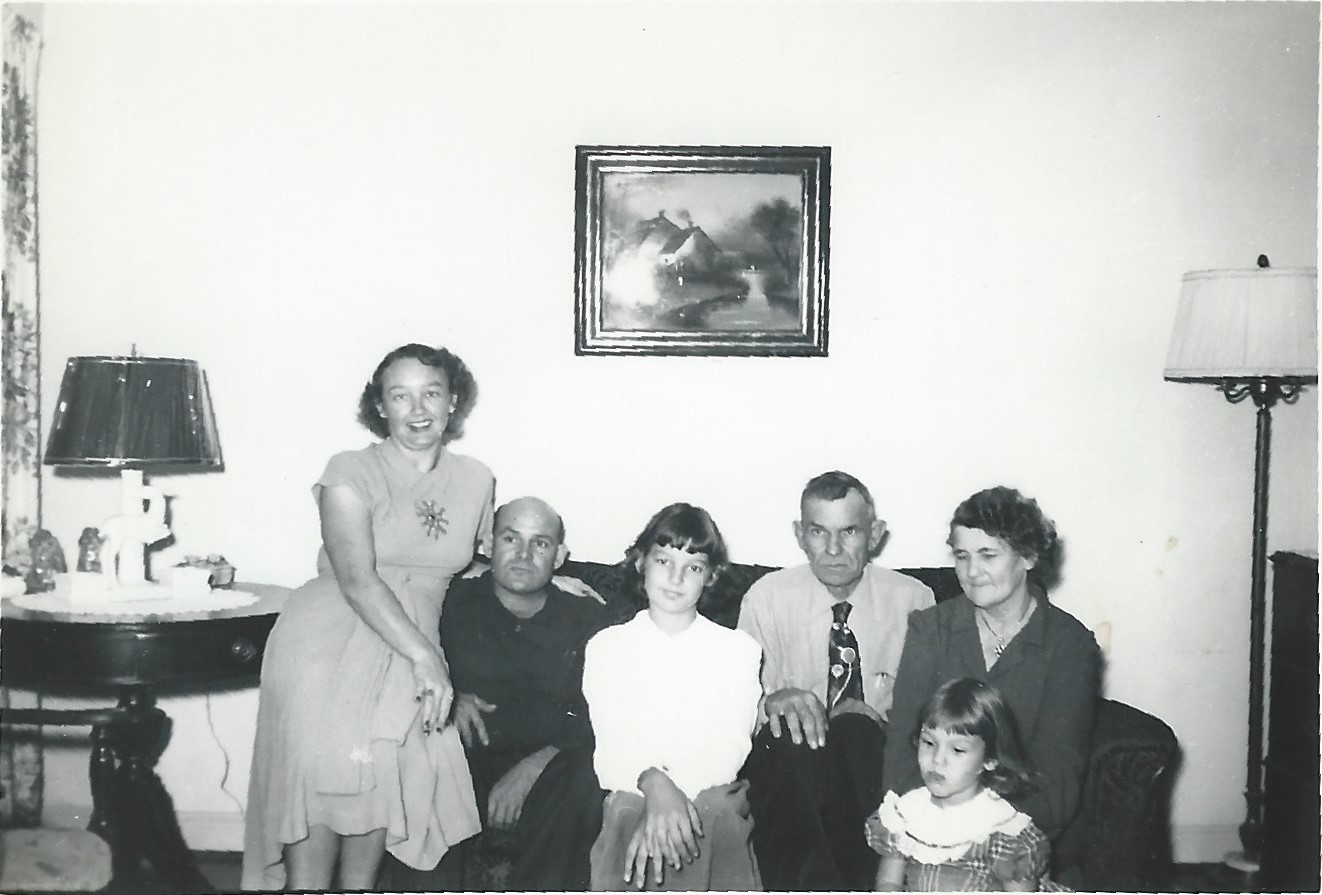
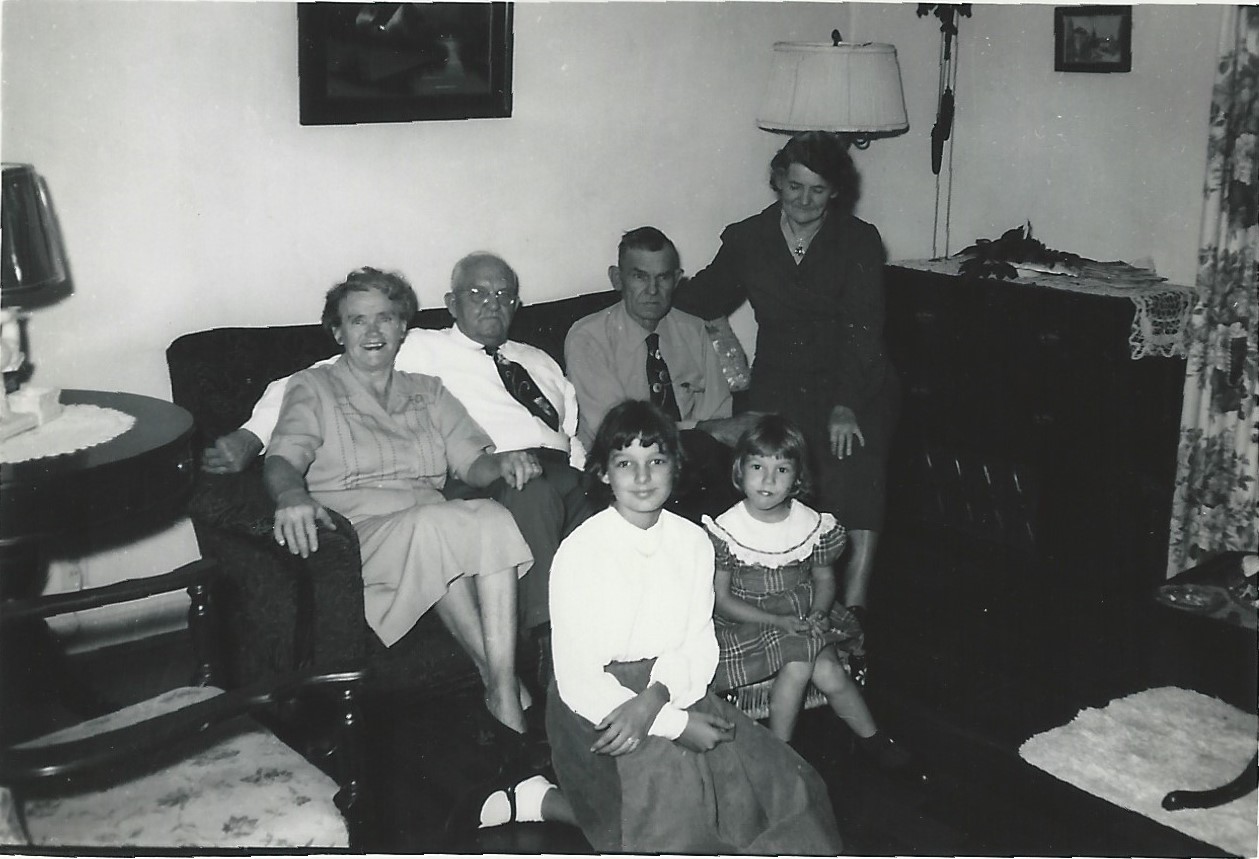
Chum and Granny (Daw’s parents Elmer and Leona) would visit Corpus Christi during holidays. Mema’s parents moved to Corpus to be closer as well — not only to Billie but to their other daughter Fay (Saunders) who lived there. Mom said a lot of people moved to Corpus during the war years because work was available.
Elmer, who had a furniture making business by that time, made the round table in the photo below and gave it to Mema and Daw as a Christmas gift. (Val now has it.)
The next year, 1950, Harmon Dobson would walk into Moore’s Welding and say “he was going in the hamburger business.”
Stay tuned for the rest of the story.
 Geneagenie